Vietnam: Our Final Recap
Sat Dec 20 2025
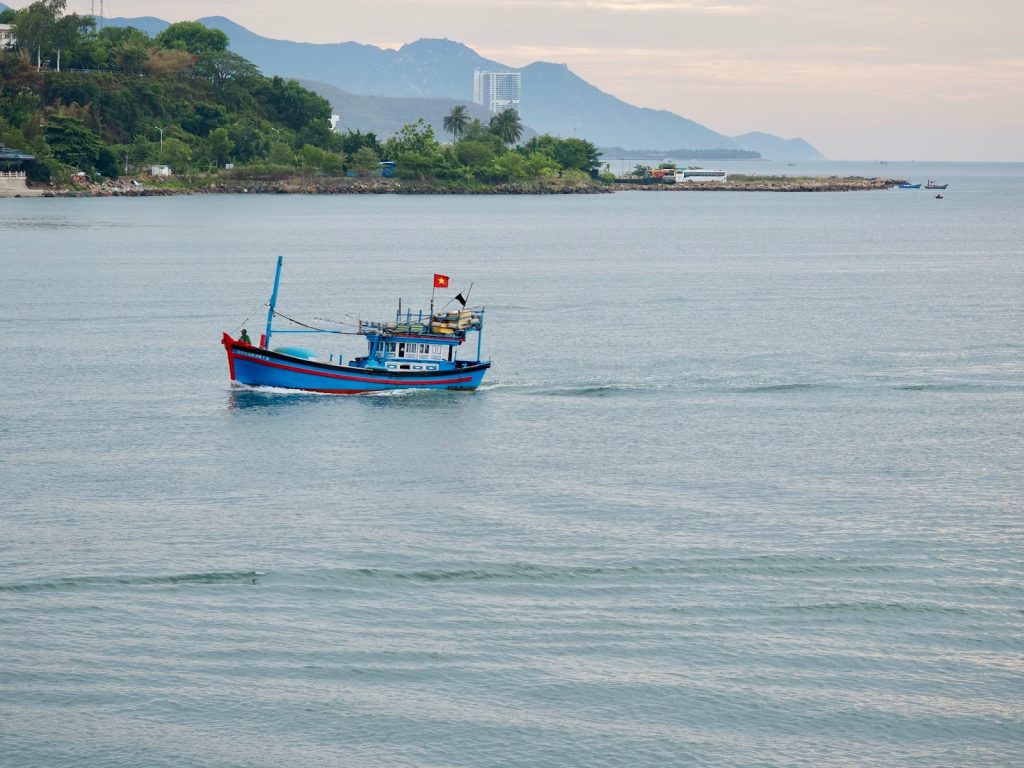
|Conor and AlinaWe had a great time in Vietnam. When we first arrived in Ho Chi Minh City, we were completely bamboozled—our senses overloaded, our ears ringing with the constant buzz of a city that never seems to pause.
After leaving Bali, we charged into Vietnam eager for something real, armed with the grand sum of one month’s experience in Southeast Asia. Our bravado felt strangely reminiscent of another overconfident arrival in this country’s history—and, like them, we were quickly reminded of who actually sets the terms here.
We were slow to adapt to cycling in the punishing heat, and progress was often sluggish, but iced coffees and fresh coconuts became our salvation. Once the heat finally forced us to rethink our approach, everything began to improve. As we etched our way up the country, we had the privilege of easing into the street‑food culture. Nowhere have we been so amazed by the unrelenting supply of fresh, fragrant dishes appearing on every corner. It would be worth returning simply to eat there again.
Our Bikepacking Stats – By the Numbers
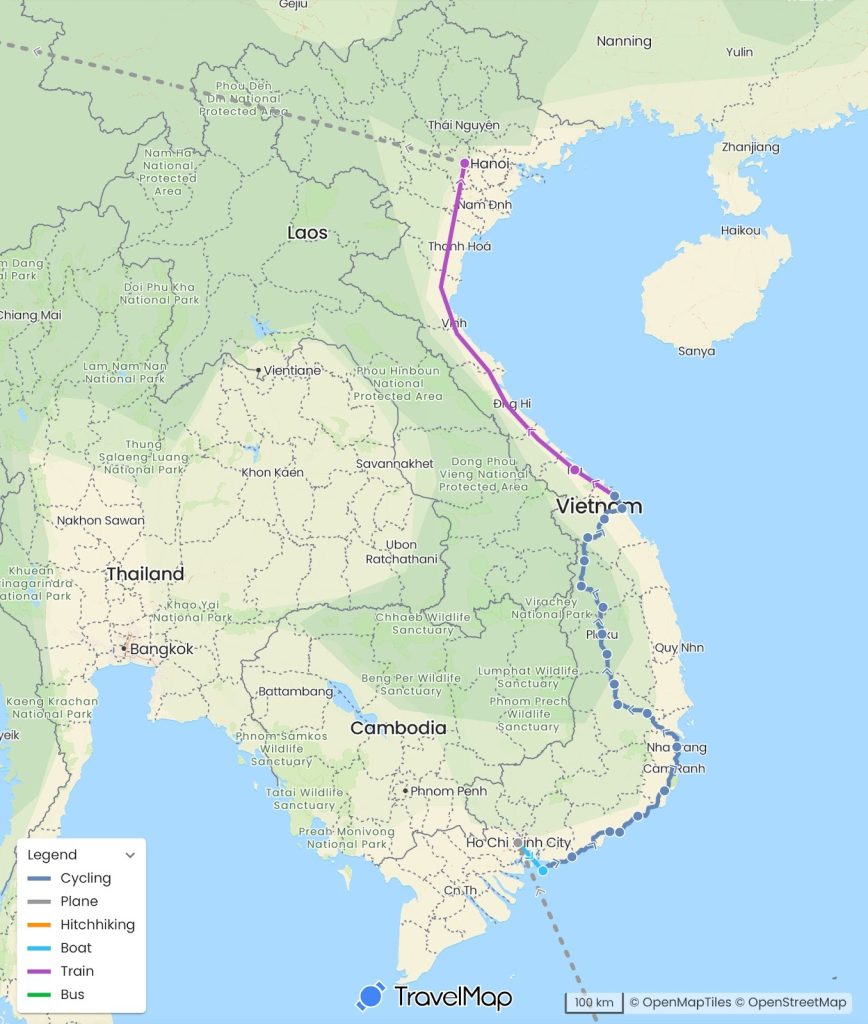
Apart from New Zealand, Vietnam is the one other place where we racked up some serious distance on the bicycles—we pedalled the length of about half the country.
🚴♂️ Total distance cycled: 1,108 km
⛰️ Elevation gained: 8,110 m
📆 Total days of cycling: 18
🛠️ Number of punctures or major mechanical issues: 0
Just as we were weighing up how to tackle the northern section of the country, a typhoon hit and took the decision out of our hands, triggering army emergency responses and mass evacuations further north.
Even at the best of times, the weather made cycling uncomfortable, and rural roads regularly dissolved into mud tracks. With no experience of typhoons, we assumed the worst and decided to quit while we were ahead.
Accommodation & Sleeping Arrangements
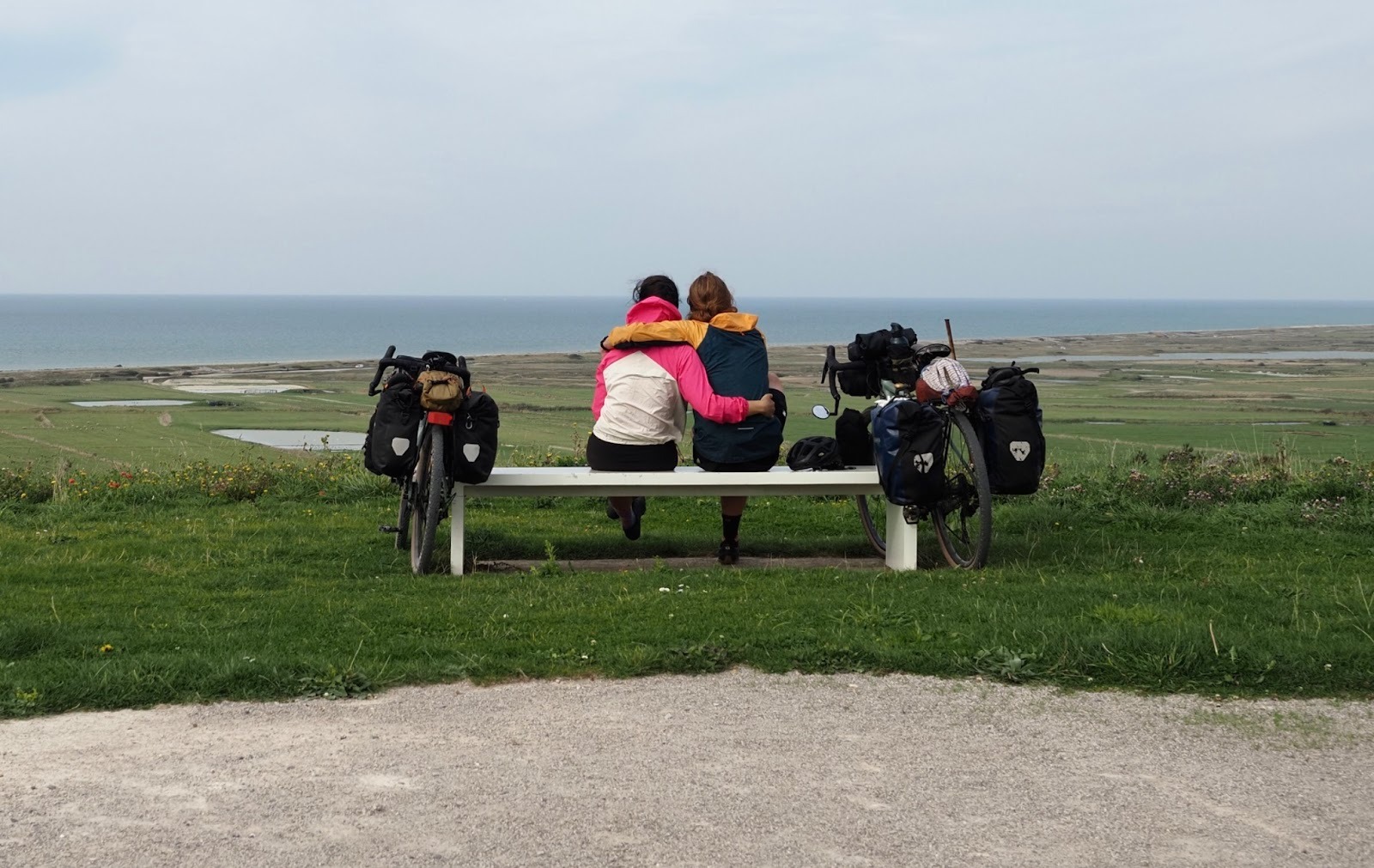
As in Bali, we didn’t use our tent once in Vietnam. We hauled it across the entire country “just in case.”
We learned—via a WhatsApp group for bicycle tourists in south east Asia—that some riders were camping their way through the region. We admired the resolve, but saw it as the more self‑punishing end of hardcore bike touring, and it wasn’t for us.
So we stuck to our bland and interchangeable hotel rooms. Accommodation dictated our daily routes: sometimes rides were cut short, other times we were on the road at dawn to reach a pre‑booked room by midday. Romantic? Not really. Necessary? Absolutely. If we weren’t under air conditioning by 13:00, something—or someone—was going to suffer.
Vietnam Budget Breakdown
💰 Total average cost per month: €673 (per person)
We really weren’t worried about our spending in Vietnam. This must what it feels like to be a millionaire. The anticipated cheap travel costs of Southeast Asia became a reality, and our expenses dropped significantly. It was the cheapest country on our trip by far.
👉 We mostly ate, slept, and rode our bikes, engaging in very few tourist activities.
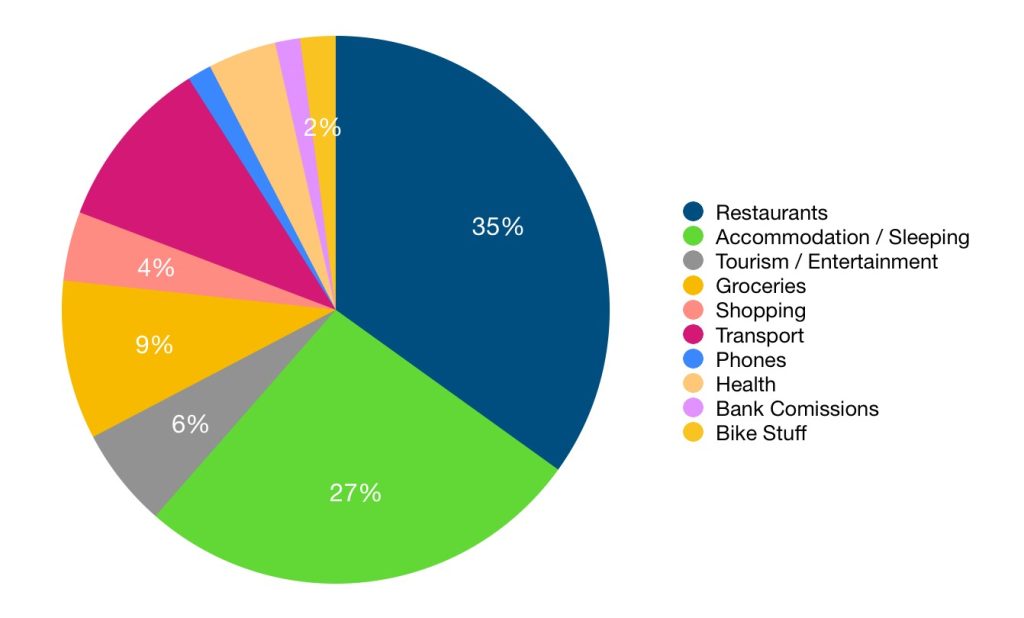
Food & Drink
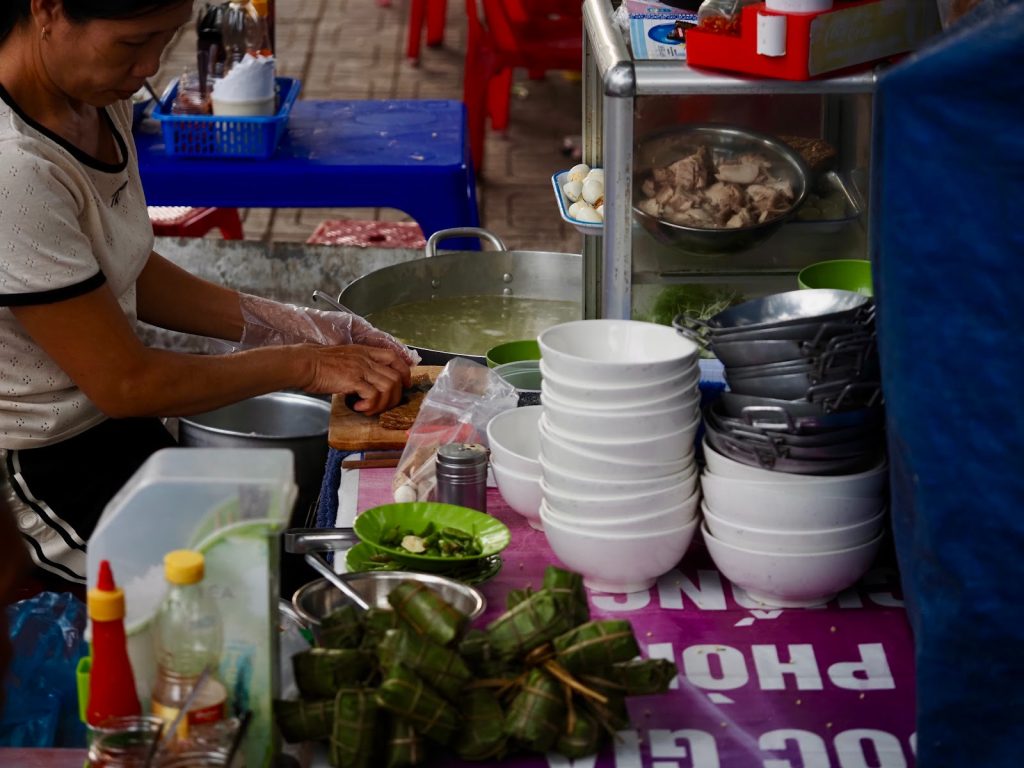
Maybe it was all just a dream—perhaps we contracted some strange tropical fever and hallucinated the whole thing. We can scarcely mention Vietnam without slipping into a one‑way monologue about how unbelievably good the food was. Across the board, it was incredible; we genuinely lack the vocabulary to express how much joy we found in eating our way across the country.
If phở started a religion, we would happily pray at its altar three times a day (PHO‑losophy?). The tragedy, of course, is that we are now permanently spoiled. Our friends will forever have to endure comments like: “In Vietnam this would cost less than a euro”… “In Vietnam this would have simmered for days—that’s why the flavour is better”… “This is kind of like a dish we had in Vietnam—but, you know, not as good.”
In short, the food was so exceptional that it has done measurable damage to our egos.
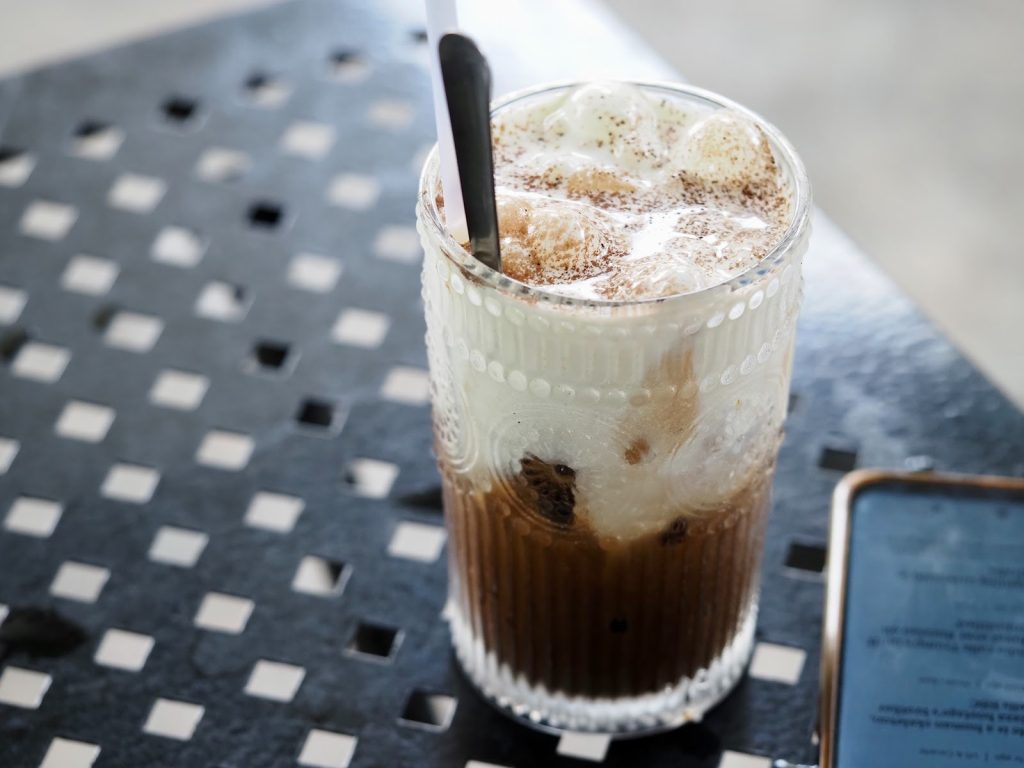
Vietnam also has a quirky and complex relationship with coffee. The French brutally introduced coffee to Vietnam in 1857. Since then, it has become a staple export, and Vietnam is now the second‑largest coffee exporter in the world. The local market has developed its own unique coffee culture, favouring sweet iced drinks. We typically drank salted coffees or iced teas with questionable tapioca balls floating in them. In more built‑up areas, you could also find egg coffees and cheese coffees, although these seemed aimed more at tourists than locals (or maybe we only noticed the signs when they were in English).
On the other side of the coin is Vietnam’s very different approach to food hygiene. The best way to describe it is with a mental image.
On the side of a busy road, a pig carcass lay roughly butchered on a blue tarpaulin spread across the ground. There was no refrigeration and only minimal shade from the morning sun. Traffic rushed past, kicking up dust, with nothing separating it from the meat. From there, pieces were sold directly to customers stopping briefly on passing scooters—money and meat freely passing through the same hands.
Although we were never sick, it’s clear that it could have happened to our virgin stomachs at any moment. We were lucky to dodge our way through breakfast, lunch, and dinner every day without any gastro issues.
Route Planning & Navigation
When we landed in Vietnam, we started looking for a road map of the country. This proved to be a task we were not well suited for. In the end, we did manage to find one, but it was next to useless. Vietnam is constructing major new roads at such a rate that maps can barely keep up, while at the same time rural roads are being washed away.
So we leaned on the crutch of digital maps and put more faith in the Google gods than we normally would. We had a few tough moments, but overall it worked reasonably well.
⚠️ Cycling Safety in Vietnam
As in Bali, two wheels are a common sight on Vietnamese roads—although mostly motorised. The main difference here was the size of the roads. We often found ourselves on major roads with three lanes: one for trucks and cars, one for small cars and scooters, and one for bicycles and slow scooters.

Even on major roads, we had it pretty good, sharing our lane mostly with overloaded scooters and the very, very old ones. There were two main things we learned to watch out for. First, the scooter/bicycle lane was often abused by scooters coming from the opposite direction to bypass long stretches of road with no turn‑off options. This meant dealing with random traffic coming at you head‑on, which certainly kept us on our toes.
The second issue was merging traffic. Without exception, every single road user neglected to look before merging into our lane. It took some getting used to.
A special mention also goes to the casual welding happening right beside the main streets. It took us a while to stop instinctively looking directly into the blinding light of the welding sparks, drawn in by the crackling noise and bright flashes like moths to a flame.
So, as long as you can avoid being blinded by welding lights or deafened by honking trucks, you should be okay.
Final Thoughts
We would absolutely return to Vietnam—just probably not on bicycles. A motorbike feels like the perfect way to travel, while trains and buses—rattling and bumpy as they may be—would also do the job.
Vietnam taught us that it’s not a country you simply power your way through. Try to impose your own social norms and you’ll quickly learn that you’re not the one setting the pace. But meet Vietnam on its own terms, adapt to its rhythm, and it has a way of rewarding you with an unforgettable experience.